
The Data School
8 opportunities
Australia
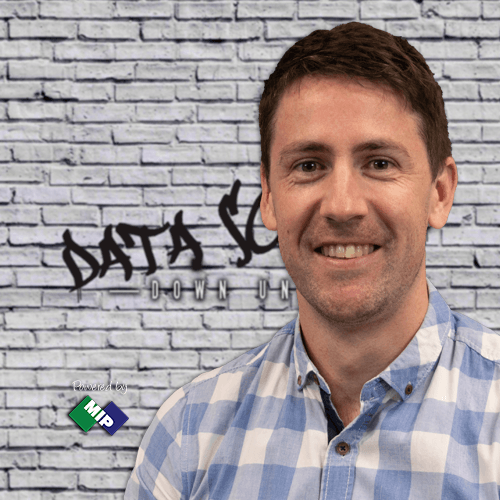
Tim Fawcett
Communications and Psychology
Data Analytics Consultant
Tim has had a diverse career path in marketing and property development and most recently as a backend software developer in Melbourne. During this time Tim worked with Java and Ruby. His interest in data analytics is relatively recent and arose in part from a desire for a role with more emphasis on communication of technical knowledge and to present and discuss ideas with clients and collaborators. Tim enjoys playing basketball competitively/socially and exploring Sydney’s many nearby coastlines. His favourite meal is Chicago deep-dish pizza.
1. What was your background before joining the Data School?
Before joining the Data School, I had a varied background. My most recent role was as a Junior Software Engineer, which I found quite dry and lacking in human interaction. Prior to that, I had my own business in property and real estate in Melbourne, and had also worked in marketing. I was interested in staying within the tech industry but wanted a role that would allow for more business interaction and problem-solving, which led me to research data analyst and business analyst positions. The Data School's program and application process appealed to me, as it seemed to offer a more practical and creative approach compared to a traditional job application.
2. Can you describe a typical day during the initial four-month training period?
The training program had a structured approach, with periods of focus on specific tools and skills, such as Tableau, Alteryx, SQL, and data modeling. Typical days would involve a mix of interactive lectures, where the cohort would learn new concepts, and hands-on lab sessions, where we could apply what we had learned under the guidance of the instructors. The program was designed to be practical, encouraging us to dive in and learn on the go, rather than aiming for perfection before attempting to implement solutions.
3. How did the training program prepare you for working with clients?
The training program instilled in me a sense of confidence and problem-solving skills that helped me transition into the client work phase. I learned how to quickly adapt to new challenges and not be afraid to dive in, even if I didn't have a complete understanding of the problem. The program also taught me to take a more consultative approach, where I could provide recommendations and push back when necessary, rather than just delivering what the client requested.
4. Can you describe a memorable project or piece of work you're proud of?
One of the most memorable projects for me was when I had the opportunity to be the team lead on a project. This allowed me to see the bigger picture and work collaboratively with my team members, guiding and assisting them as needed. I found this experience very rewarding, as it gave me a deeper understanding of how the different components of a data project come together and the importance of effective teamwork and communication.
5. How has the support from mentors, colleagues, and coaches been throughout the program?
The support has been great, and I’ve experienced it in two key ways. First, if I’m stuck on a data problem, I can reach out to my cohort, teachers, or the broader support network. It’s helpful to get a fresh perspective or a quick win to move forward. Second, the support extends beyond technical challenges—it’s also about building confidence. Teachers like Bethany have been fantastic at easing imposter syndrome and offering encouragement when needed. That combination of technical guidance and emotional support has been a really positive aspect of my experience.
6. How has that confidence grown as you’ve worked with stakeholders?
I’ve gained the confidence to acknowledge when I’m unsure about something, which might sound paradoxical, but it’s been empowering. Rather than fumbling through and worrying about being questioned on my skills, I’ve learned to be clear about what I can deliver and what’s realistically possible. This has also helped me adopt a more consulting-focused approach—pushing back when needed, instead of just providing the answer the client might expect. I now feel more assured in trusting my training, experience, and judgment, which has been a valuable shift in how I approach challenges and conversations with stakeholders.
7. How has the Data School program helped you launch your career in data?
The program has been an excellent foundation, giving me the skills and confidence to thrive in the broader data world and job market. Coming from an agency deeply embedded in this field, I feel assured that the training aligns with industry demands and project expectations. It's also been valuable to experience the consultancy side of data work, collaborating with diverse clients and gaining insights into varied business environments. Additionally, the program fosters a strong network of peers, trainers, and mentors, which has been invaluable for support and professional connections as I grow in this field.
8. What advice would you give to someone considering applying to The Data School?
Take the time to dive into some research. There’s a wealth of resources online—YouTube has great content on what it’s like to work as a data analyst or consultant, and platforms like Tableau Public can really spark creativity and inspiration. Similarly, Alteryx challenges are a great way to get hands-on experience and understand the types of problems you might encounter in the field. It’s also worth reflecting on your own strengths, weaknesses, likes, and dislikes since data analytics is such a broad field and can offer something for everyone

Oliver Inthavong
Mathematics
Data Analytics Consultant
Oliver graduated from USYD with a Bachelor of Science (majored in Mathematics, Financial Mathematics and Statistics) and has 7 years in teaching experience. During his time studying and tutoring, he discovered his passion for data analytics while exploring the world of finance and investing.
Over the years, he researched how innovative companies have leveraged their data by building valuable products, services, and technology. He soon realised he wanted to be part of a company that helped others make smarter decisions and really understand their data. That’s when he recognised he would be the perfect fit for The Data School!
In his free time, he enjoys watching anime, sports (particularly NRL and NBA), lifting weights, and talking about anything investing related.
1. What were you doing before the Data School?
I spent eight years as a private teacher and tutor, teaching high school students math and chemistry. It was my primary role from when I left school, during university, and even throughout COVID. Teaching was fulfilling, but during the lockdowns, I had time to reflect and realized I wanted a new challenge. I came across the Data School online and was intrigued by its unique structure and opportunity to learn while working. I saw it as the perfect way to switch careers and explore the world of data analytics.
2. Can you walk us through a typical day during your initial training period?
Training was intense but structured. Mornings began with our coach, Bethany, explaining key concepts and providing examples. We would then apply what we learned through hands-on exercises, often collaborating with our cohort. Afternoons were spent practicing new tools like Tableau, Power BI, and Alteryx. The focus on both technical and soft skills was a highlight. It was rewarding to see our progress over the four months, building confidence and capability through consistent practice and feedback.
3. How did the 4-month training prepare you for working with industry clients?
The training laid a strong foundation in both technical and interpersonal skills. Bethany provided clear objectives and exercises that mirrored real-world scenarios. When transitioning to client projects, I initially struggled to adapt as I had to determine how training exercises applied to client needs. Over time, with experience from multiple projects, I became more confident in translating those skills into tailored solutions for stakeholders. The training also taught me the importance of communication and flexibility, which proved invaluable in managing client expectations and delivering impactful results.
4. Describe a memorable project you've worked on so far.
A standout project involved building an Optical Character Recognition (OCR) tool using Alteryx and Python for internal audit. We were tasked with detecting member signatures in PDF forms—something I initially doubted was possible. After six months of hard work, we delivered a solution that converted PDFs to text, applied logic to detect signatures, and validated findings for accuracy. This tool was so effective that it was recommended for ongoing use by another team. It was incredibly rewarding to see our work not only meet but exceed client expectations and contribute to improved business processes.
5. What do you most enjoy about your work with clients?
I love engaging with new people and building rapport before diving into business discussions. Establishing personal and professional connections is both fulfilling and vital for successful collaboration. Consulting allows me to combine my passion for problem-solving with helping others. It’s incredibly satisfying to provide data-driven solutions that address client challenges and make a tangible impact. The rewarding moments come when clients express how our work has simplified their processes or answered critical questions, reinforcing my purpose as a consultant.
6. What advice would you give to someone considering a career switch into data analytics?
Understand that it’s okay to feel uncomfortable—it’s part of the growth process. Switching careers requires a long-term mindset and patience. Don’t expect overnight success; focus on incremental learning and improvement. When I first learned Tableau for my Data School application, I was overwhelmed. But by pacing myself and embracing challenges, I gained confidence. Career switches are investments in yourself, and with persistence, the results will compound. My advice: stay consistent, trust the process, and seek out supportive environments like the Data School, which guide you through the transition and provide invaluable learning opportunities.

Prerana Amatya
Environmental Engineering
Data Analytics Consultant
Prerana holds a bachelor’s degree in Environmental Engineering. She began her journey into data analytics as a research assistant, dedicating two years to climate change research at an international research institute.
Seeking to broaden her horizons in business and technology, she transitioned to software development. Over two years, she honed her skills as a UX designer, specializing in crafting analytical dashboards for various clients.
With a keen eye for detail and a passion for uncovering insights, Prerana is eager to merge her analytical prowess and creativity in her new role in data analytics. She is excited to embark on this journey at The Data School, where she aims to apply her expertise to drive impactful business solutions. In her free time, Prerana enjoys cultivating plants in pots and expressing her creativity through painting.
1. What were you doing before you joined the data school?
Before joining data school, I used to work as a UI UX designer for a software company. When I moved here to Australia, and I found that the data analytics industry is really great. I have an engineering background, and I was first introduced to data analytics through some work I did in climate change using Python and R. I was interested in bridging the gap between software and business, so I wanted to utilize both my data analytics experience and design experience to advance my career in data analytics.
2. How has it been coming from an engineering background to the data analytics industry?
My engineering background has been helpful, as we covered some mathematical and coding courses like MATLAB and Python. That knowledge provided a good foundation for the work in data analytics. The way of thinking from an engineering background also translates well to certain aspects of data analytics.
3. Can you walk me through a typical day during the four-month training period?
A typical day would start with me arriving at the data school office before 9 AM, grabbing a coffee, and greeting my fellow cohort members and our coach, Bethany. She would outline the plan for the day, which could involve training sessions on tools like Tableau, Power BI, and Alteryx, or guest trainers coming in to work on our soft skills. We would start the day learning the concepts and tools from the coaches and then spend the rest of the day practicing and collaborating with our teammates to find the best solutions to the problems. It was a packed schedule full of learning and hands-on practice.
4. What has it been like transitioning from the training phase into working with clients on your placement?
The transition from the training period to the client placements feels quite different. During the training, the focus was on learning and improving ourselves, but in the client placements, we are applying that knowledge in real-life scenarios. We have to gather requirements from stakeholders, manage their expectations, and develop solutions or proofs of concept based on their needs. It's a shift from the more structured learning environment to the practical application of our skills.
5. Do you have a most memorable project or piece of work from your client placements?
The most memorable project for me was my first client placement, which involved using Tableau as a web application for a major bank. They were looking to streamline their deal settlement process, which had previously been done in Excel. Working with a senior consultant, we were able to develop a solution that significantly improved the bank's workflow and efficiency. The feedback from the initial release was very positive, as the bankers no longer needed to rely on Excel for these calculations.
6. What has the support been like from mentors and colleagues throughout the program?
The support from mentors and colleagues at the data school and MIP has been excellent. Everyone is very knowledgeable in their respective fields and tools, but they are also incredibly approachable and willing to help. Whenever I've needed support, whether it's for a client placement or a project, the senior consultants and other staff have been responsive and eager to provide guidance. This collaborative and supportive environment has been a key factor in my growth and development.
7. What attracted you to the data school compared to other roles in the data industry?
One of the key things that attracted me to the data school was their focus on assessing candidates based on their skills, rather than just their past experience or traditional CVs. I also reached out to some of the data school alumni and heard very positive feedback about their experiences, which further reinforced my interest in the program. The opportunity to learn from industry experts and work with prominent clients was also a major draw.